Protect your filing date first
What an intent to file does, what its confirmation tells you, and how to keep a dated filing timeline with every confirmation and receipt.
Read the Intent to file guideA first-time filing guide for veterans
by Dale Hartwell
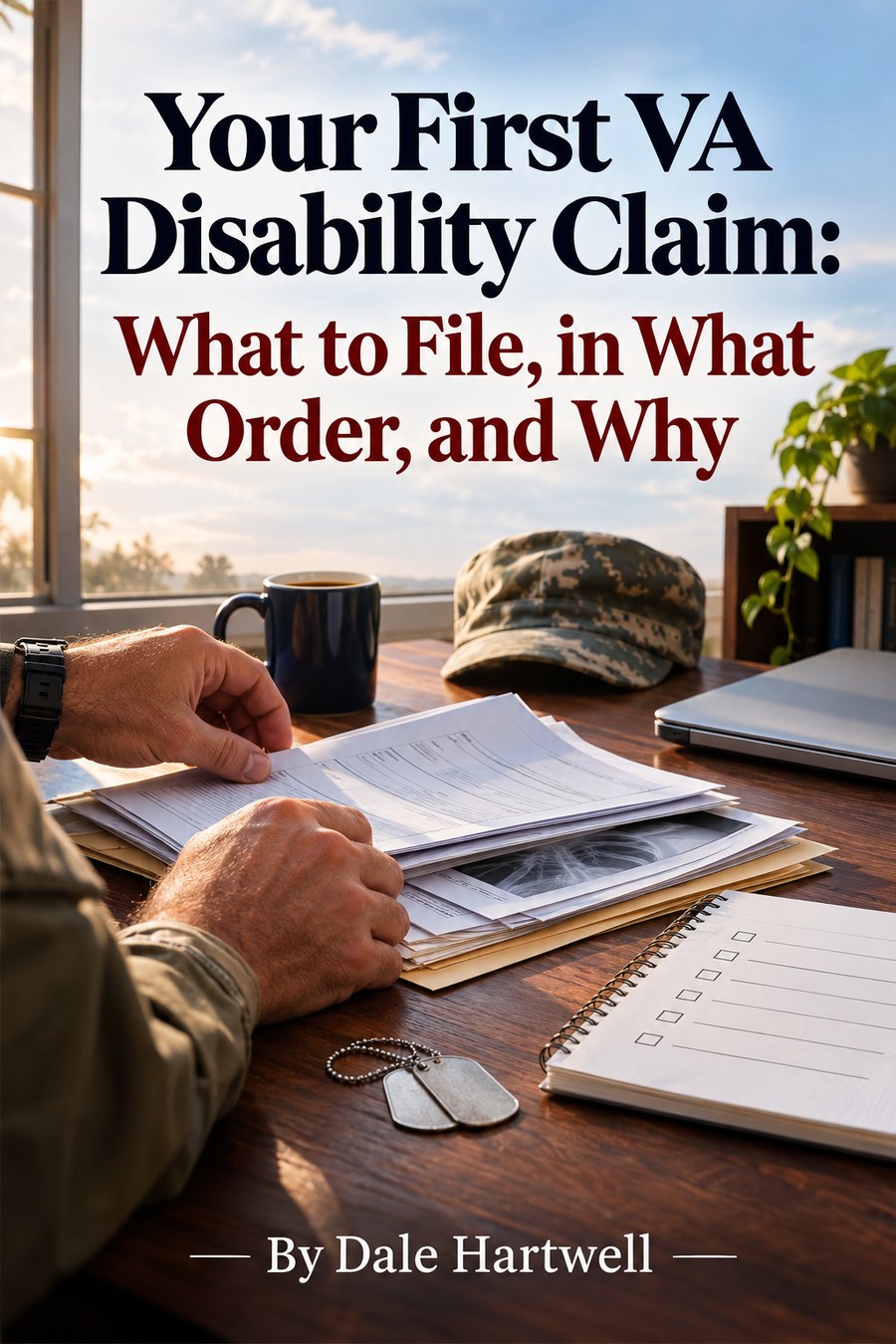
Your first VA disability claim is more than an application: it is a record of what happened during service, what affects you now, and how the two connect. This book follows the process in order, from protecting a potential filing date to following the claim through to a decision, so you always know what to file next and why.
ASIN B0HRTCFS9K · Published November 16, 2026 · Purchases happen on Amazon
Inside the book
The book treats a first claim as a record you build step by step. Each chapter area answers one practical question a first-time filer actually faces.
What an intent to file does, what its confirmation tells you, and how to keep a dated filing timeline with every confirmation and receipt.
Read the Intent to file guideA three-column worksheet that lines up your current disability, the in-service event, and the connection between them, so you can see exactly what is still missing.
Read the Evidence worksheet guideDeployment documents, pharmacy records, employment physicals, journals, and correspondence can all support a first claim when records are incomplete.
Read the Alternative records guideFile independently or seek representation, check a specific person’s VA accreditation, and recognize warning signs such as promised ratings or requests for account passwords.
Read the Choosing a representative guideClear condition names, the affected side of the body where relevant, separately identified related problems, and plain symptom descriptions when no diagnosis exists yet.
Read the The application form guideWhat happens at the C&P exam, how to describe typical days and worst days honestly, what claim status labels mean while you wait, and how the VA rater decides.
Read the C&P exam and claim status guideThe approach
From protecting a potential filing date, to gathering evidence, submitting the application, attending examinations, and tracking the claim to a decision. Each step builds on the last, so the order of what to file is never a guess.
Accurate descriptions, organized records, and proof of what you submit. The book gives you practical tools, like a dated filing timeline and a three-column evidence worksheet, to keep that record straight.
Physical and mental health conditions both belong in a first claim. The book encourages an inventory of symptoms, diagnoses, and daily limitations, including problems you may have normalized or never reported.
The focus stays on an honest account of your experience rather than exaggeration, concealment, or unsupported certainty. Unexplained symptoms are treated as reasons to seek evaluation, not invitations to self-diagnose.
Readers
Straight answers
Short, direct answers first. Each one is covered in depth in the book and in the matching guide on this site.
It confirms that VA recorded your intent to file and shows the date that may anchor any back pay if your claim is approved. It is not a completed application, so keep the date and the confirmation in a dated filing timeline and verify the deadline that applies to you.
The C&P examiner gathers examination findings; the VA rater weighs the whole claim file and makes the decision. An exam is not a rating decision.
Yes, as a dated source. A pharmacy entry shows what was dispensed and when; it does not by itself establish what caused a condition. Treat it as one more dated line in your filing timeline.
Describe it plainly: what you notice, when it occurs, and what activity it interrupts. You do not need to assign yourself a diagnosis to describe a problem accurately.
Use the same activity on both days and describe the frequency and the differences. Do not present the worst day as if it were every day.
Yes. Accreditation attaches to the individual attorney, claims agent, or VSO representative, so check the named person in VA’s accreditation search rather than relying on an organization’s branding.
The three columns are your current disability, the event during service, and the connection between them. For every blank cell, write the next question you still need to answer rather than an unsupported conclusion.
Pair each dated copy you submit with its confirmation under one short reference name in a single claim log, so every submission has a matching receipt you can find later.
The book
If you are preparing a first VA disability claim and want the steps in the right order, Your First VA Disability Claim by Dale Hartwell lays out what to file, in what order, and why, with the worksheets and timelines to keep your record organized.
The purchase happens on Amazon. This site is a companion to the book.